

INDUSTRIES

Transform Airport Waste Management Across Terminals, Airside, and Landside Operations

background-airport-1

Smart bins with fill-level sensors eliminate overflow complaints, optimize collection routes, and help airports hit ambitious zero-waste targets while improving passenger experience.


The Airport Waste Management Challenge

Passenger-Facing Overflow Disasters

Nothing damages passenger experience like overflowing bins in terminals. Peak travel periods create waste surges that fixed collection schedules can't handle. One overflowing bin near security creates complaints on social media and reflects poorly on the entire airport brand.

Blind Collection Operations

Your teams collect bins on fixed schedules with no visibility into actual fill levels. Half the bins are barely full, the other half are overflowing. You're wasting labour collecting empty bins while passengers see overflows.

Airside Security & Access Complexity

Airside waste collection requires security clearances, vehicle permits, and coordination with flight operations. Every unnecessary collection trip costs time and creates operational friction with airlines and ground handlers.

Multi-Stakeholder Coordination 

Airlines, retailers, food vendors, ground handlers—everyone generates waste, but coordinating who's responsible for what creates constant disputes and inefficiencies. No centralized visibility means no accountability.

Real-Time Fill Monitoring Across Your Entire Airport

Prevent Passenger-Facing Overflows

  • Get alerts when bins reach 80% capacity in high-visibility areas like security queues, baggage claim, and food courts. Dispatch cleaning teams proactively before passengers notice.

  • Optimize Collection Routes by Terminal & Zone

  • Why send crews to Terminal 2 when all bins are 30% full? Smart routing means you only collect when needed, reducing labour costs by 30-40% while improving service levels.


Reduce Airside Vehicle Movements

  • Every airside trip requires coordination and creates operational risk. Cut unnecessary airside collections by 45% by only servicing bins that are actually full.


Track Waste by Stream & Location

  • See exactly where recyclables, organics, and general waste are generated. Identify contamination hotspots, optimize bin placement, and prove waste diversion rates for environmental reporting.

  • Ensure Airside & Landside Compliance

  • Superfy automatically creates transfer documentation & permits to allow for authorised Airside to Landside material transfers.  Removing an important manual headache.

Routing-Screen-with MINI-840x840-2

Retail-840x840


Terminal Retail & Food Court Optimization

Challenge
Major international airport with 60+ restaurants and retail outlets saw constant complaints about overflowing bins during peak hours (6-9 am, 4-7 pm). Fixed collection schedules meant bins were serviced at 10 am when half-empty but overflowing by lunch rush.

Solution
Deployed Superfy sensors on 300+ bins across terminal retail areas. System alerts cleaning teams when bins reach 75% capacity. QR codes on bins allow retailers to request emergency collections during unexpected busy periods.

Result
92% reduction in overflow incidents, 35% fewer collection trips, improved tenant satisfaction scores, cleaning staff redeployed to other high-value tasks like restroom maintenance.

Gate Area & Airside Waste Management

Challenge
Airside waste collection at gates required security-cleared vehicles and coordination with flight operations. Crews collected all gate bins twice daily regardless of fill level, wasting time and creating unnecessary airside traffic.


Solution
Sensors on gate area bins and airside waste compactors provide real-time visibility. Collections scheduled based on actual need and flight schedules. Superfy Fleet optimizes airside routes to minimize vehicle movements.


Result
45% reduction in airside collection trips, improved coordination with ground operations, reduced vehicle emissions on airfield, faster turnaround times during peak periods.

airport-840x840

840x840-Materials-1


Multi-Terminal Waste Diversion Program

Challenge
Airport committed to 75% waste diversion by 2025 but had no data on waste generation patterns by terminal or waste stream. Recycling contamination rates over 30% made material recovery difficult.

Solution
Superfy Materials tracks waste by type (general, recycling, organics, hazmat) and location. Dashboard shows contamination rates by terminal and specific bin locations. Used data to relocate bins, improve signage, and target education efforts.

Result
Waste diversion improved from 48% to 71% in 18 months, contamination reduced to 12%, achieved environmental certification targets, detailed ESG reporting for stakeholders

Concessionaire & Tenant Accountability

Challenge
100+ airport tenants (airlines, retailers, restaurants) all generated waste but no clear visibility into who produced what. Disputes over waste management charges and no way to incentivize waste reduction.


Solution
Sensors on gate area bins and airside waste Superfy Collections provides tenant portals showing their waste generation data. Tenants can schedule collections via QR codes. System tracks volumes by tenant for accurate cost allocation and sustainability reporting.


Result
Transparent cost allocation eliminated disputes, 25% reduction in tenant waste generation through awareness, tenant sustainability reports for their corporate ESG goals, improved tenant relationships.

Superfy App and Screen-Insights-840x560


45 million
Passengers annually
800+
Smart bins across 4 terminals
40%
Reduction in collection vehicle movements
68%
Waste diversion rate (up from 44%)
Superfy Waste Management-Airport-2

Superfy Products for Airports

Collections

Superfy Collections

  • Tenant self-service portals with QR codes
  • Automated collection scheduling
  • Route optimization across terminals
  • Airside coordination with flight operations
  • Overflow prevention alerts

 Track

Superfy Track

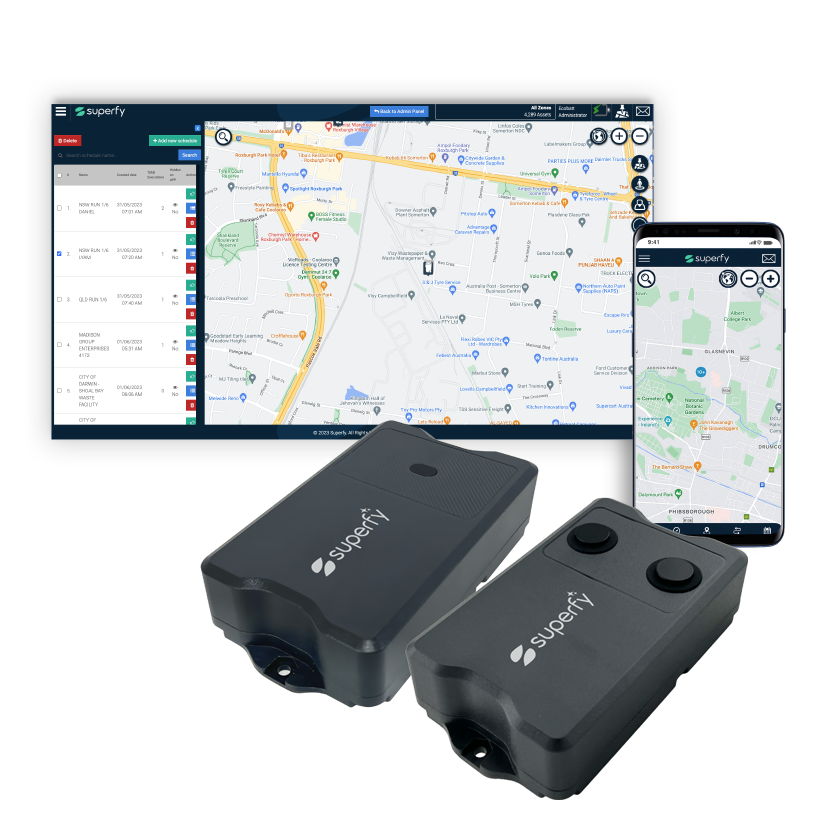
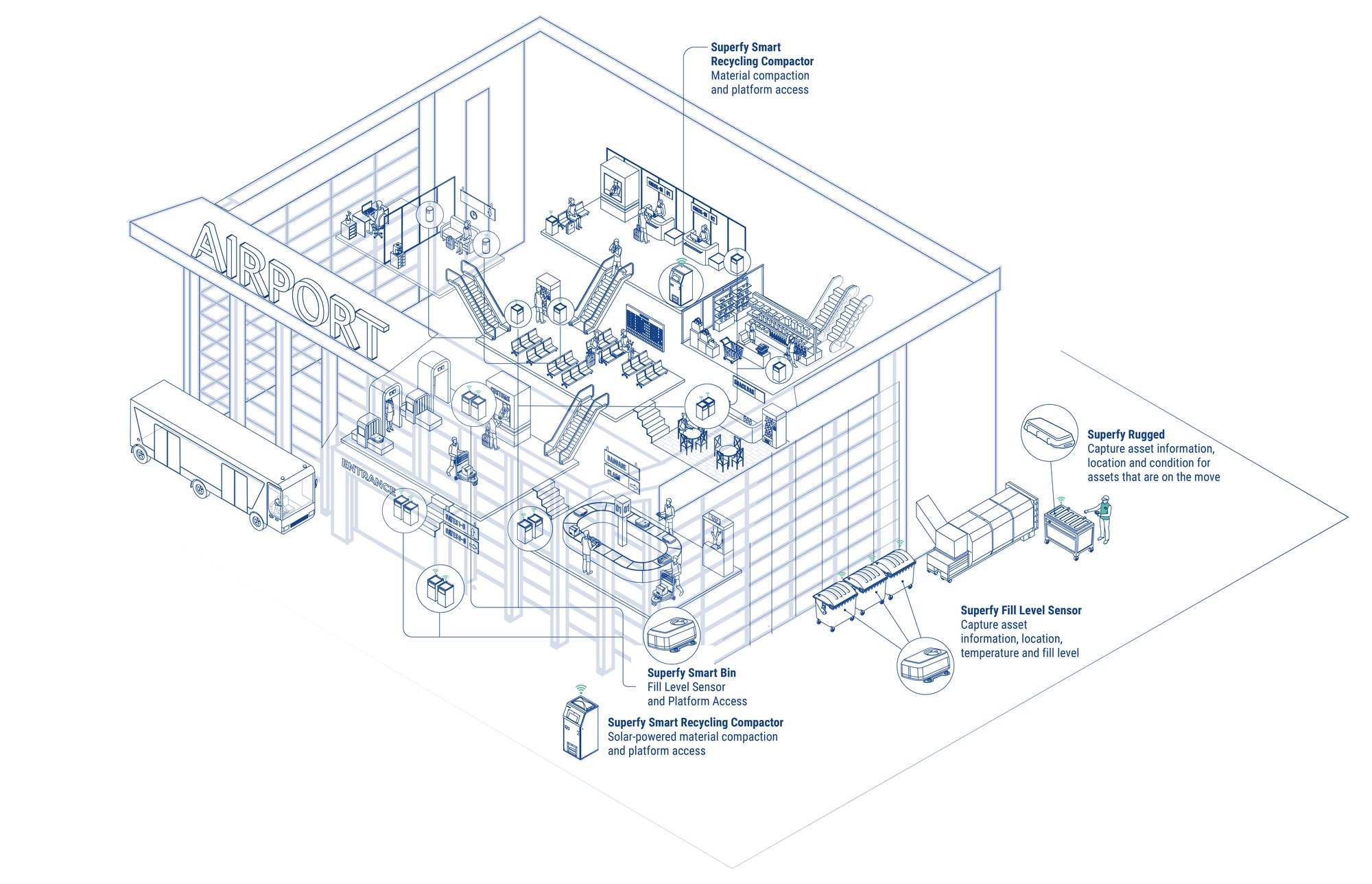
  • Fill-level sensors for bins and compactors

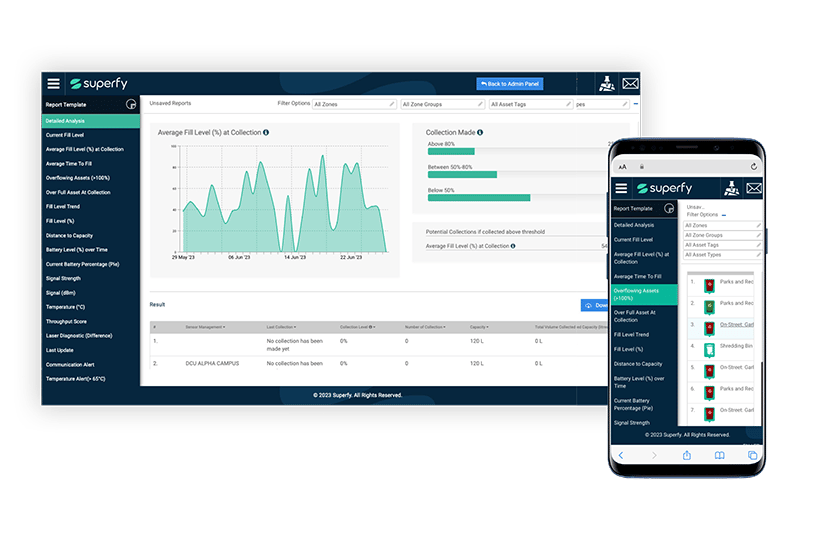
  • Real-time dashboard by terminal and zone

  • Automated alerts at 80% capacity

  • Location tracking for mobile waste units

  • Historical pattern analysis for capacity planning

Materials

Superfy Materials

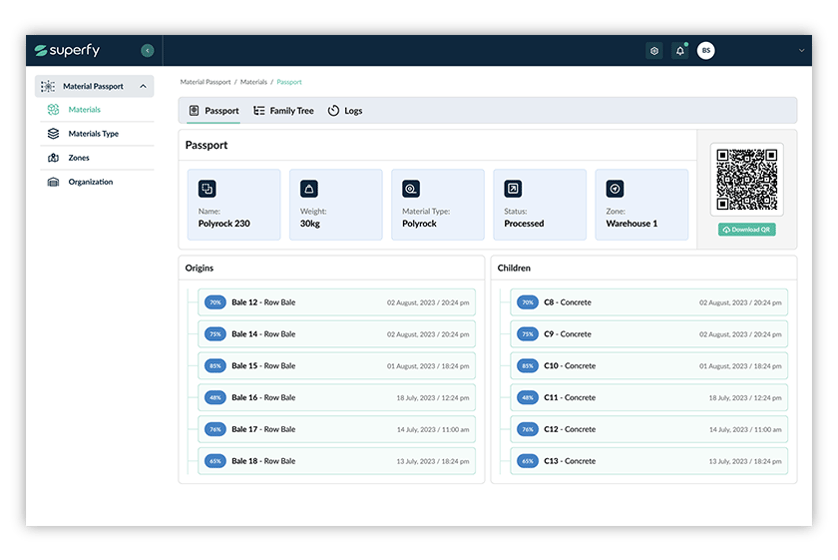
  • Waste stream tracking (general, recycling, organics)

  • Contamination monitoring by location

  • Tenant waste generation reports

  • ESG and diversion rate reporting

  • Cost allocation by tenant or airline

Fleet

Superfy Fleet

  • Airside vehicle movement optimization

  • Reduce security-cleared vehicle trips

  • Fuel consumption tracking

  • Coordination with ground operations

  • Maintenance scheduling

The Business Impact

Reduce Labor Costs 30-40%

  • Stop collecting half-empty bins.

  • Optimize crew schedules based on actual need.

  • Typical large airport saves £400K-£600K annually in labor costs.

Improve Passenger Experience

  • Prevent overflows in high-visibility areas

  • Faster response to issues 

  • Cleaner terminals = better passenger satisfaction scores and online reviews


Hit Zero Waste Targets

  • Track diversion rates in real-time


  • Optimize recycling infrastructure


  • Achieve environmental certifications

Reduce Airside Operational Friction

  • 5% fewer airside vehicle movements means less coordination overhead, 
  • Reduced emissions, and improved relationships with airlines and ground handlers

FAQ

How do sensors work in high-security airside environments?

Sensors are FAA/EASA approved for airside use with no radio interference with navigation systems. They operate on secure cellular networks separate from airport operations systems. Many major international airports already deploy our sensors airside with full security approval.

Can we integrate with our existing airport management systems?

Yes. Superfy integrates with common airport facility management platforms, work order systems, and environmental reporting tools. We can push alerts to your existing dispatch systems and pull data into your dashboards.

What about bins that get moved by cleaning crews or passengers?

Sensors include location tracking. If a bin is moved from its designated zone, the system flags it. This actually helps you track down missing bins and ensure optimal placement.

How do we handle peak travel periods like holidays?

 Historical pattern analysis predicts high-volume periods. You can pre-position extra bins and staff based on data from previous peak periods. Real-time monitoring ensures you can respond dynamically if volumes exceed predictions.

What's the deployment timeline for a multi-terminal airport?

Typical phased rollout: Pilot in one terminal with 50-100 bins (6 weeks), evaluate results (2 weeks), full deployment across all terminals (3-4 months). We recommend starting with highest-traffic terminal to demonstrate ROI quickly.

Ready to Optimize Your Airport Waste Management?