Capture the 350,000
Tonnes of Clothing
Going to Landfill
Every Year.
73% of Textiles Still Go to Landfill
Despite growing awareness of fast fashion's environmental impact, the vast majority of clothing and textiles end up in general waste. Charity shops are overwhelmed, consumers don't know where to take items, and convenient collection infrastructure simply doesn't exist at scale.
Charity Shop Saturation & Donation Fatigue
Charity shops can't keep up with donation volumes. They're selective about what they accept, have limited opening hours, and are often far from where people live. Result? Bags of clothing sit in closets for months, then eventually go in the bin during a spring clean.
Low-Quality Collections Damage Reputation
Overflowing textile bins on streets look terrible and attract fly-tipping. When bins overflow, donated clothing gets ruined by rain. This damages your brand and the entire textile recycling industry's reputation. Councils threaten to remove bins from public spaces.
No Visibility Into Collection Network Performance
You have 500+ textile bins across a region but no idea which are full, which are empty, which locations generate high volumes, or optimal collection timing. Drivers waste time checking bins, miss full ones, and collect empty ones.
Unable to Scale Without Massive Operational Overhead
Every new bin location means more manual coordination: monitoring, collection scheduling, quality control. You know there's demand for 10x more collection points, but the operational complexity seems impossible to manage. Bins contain everything from designer jeans to torn bedsheets to shoes. Without knowing what's coming, you can't plan sorting capacity, forecast resale inventory, or negotiate textile recycler contracts.
Make Textile Donation as Easy as Amazon Returns
Fill-Level Sensors Prevent Overflows
Know which bins need servicing and which can wait. Eliminate the embarrassment of overflowing bins on high streets. Optimize collection routes to visit only bins that are 75%+ full—reducing trips by 40-50%.
QR Codes Enable Smart Donations
Donors scan QR codes before depositing items. Simple questions: "What are you donating?" and "Condition?" System tracks what's coming and sends thank-you messages with estimated impact ("Your 5 items will save 50kg CO2 vs buying new").
Location Intelligence Shows Where to Expand
Data reveals which locations have high donation frequency, which demographics engage most, and where new bins would capture the most textiles. Expand strategically based on evidence, not guesswork.
Processing Optimization Through Forecasting
Know what's in your bins before collection. "Tomorrow's collections contain estimated 60% women's clothing, 25% shoes, 15% household." Plan sorting staff, prepare resale inventory, and schedule textile recycler pickups accordingly.
Supermarket & Retail Car Park Network
Challenge
UK textile recycler with 400 bins in supermarket car parks saw inconsistent donation volumes. Some bins overflowed weekly, others stayed 20% full for months. Manual monitoring required drivers to check every bin, wasting 30% of collection time on empty or near-empty bins.
Solution
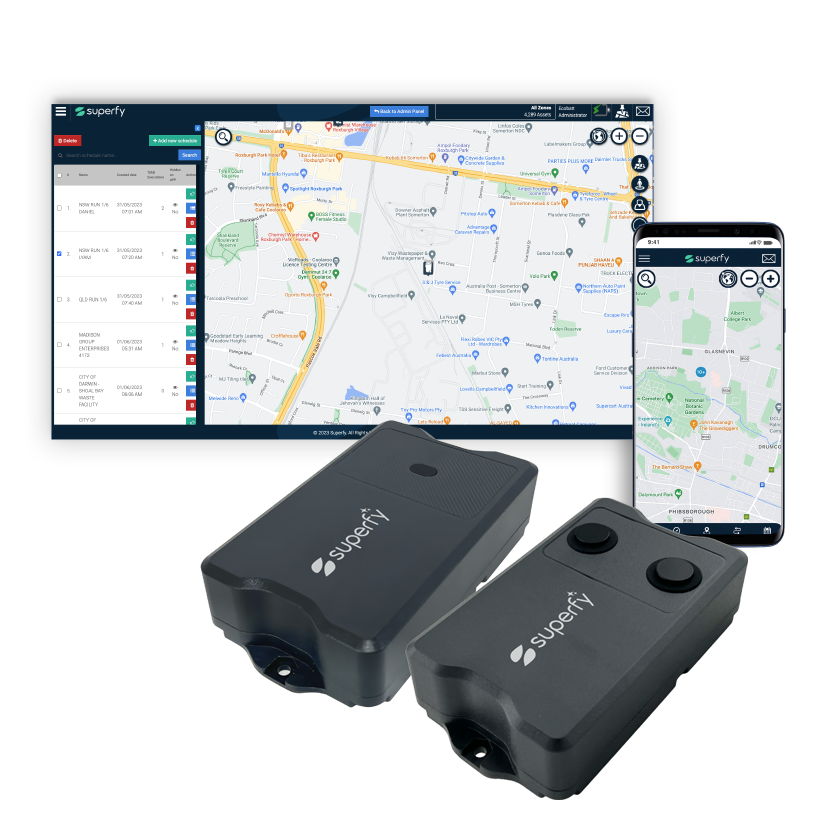
Deployed Superfy Track sensors in all bins. Dashboard shows real-time fill levels. QR codes allow donors to report issues ("bin damaged," "lock broken"). Collections scheduled automatically when bins reach 75% capacity. Superfy Fleet optimizes routes to minimize driving between locations.
Result
47% reduction in collection trips, eliminated overflow incidents (was 15-20 per month), collected 35% more textiles with same vehicle fleet, identified high-performing locations and negotiated better lease terms with retailers based on data, expanded to 150 additional locations with confidence.
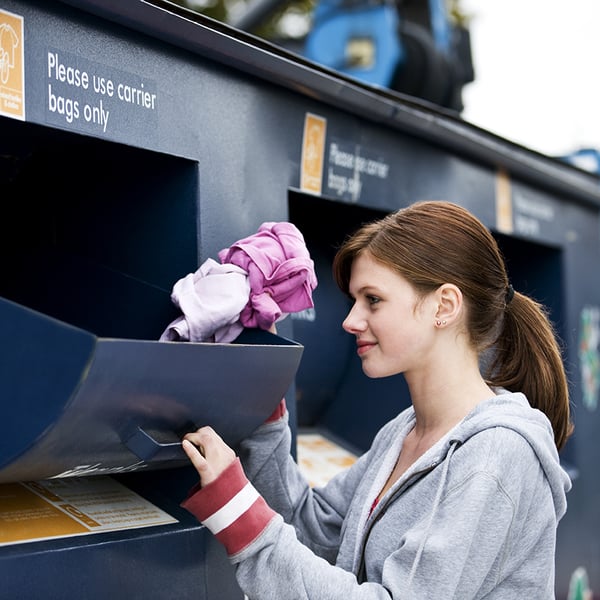

Multi-Family Housing & Apartment Complex Program
Challenge
European textile collector wanted to tap into apartment buildings but had no scalable model. Placing bins in building lobbies required ongoing coordination with property managers. No way to track performance or prove value to justify placement fees.
Solution
Offered property managers branded portals showing their building's donation volumes and environmental impact. Residents scan QR codes when donating, triggering automatic collection scheduling. Buildings compete in regional sustainability rankings.
Result
Expanded from 20 pilot buildings to 300+ in 18 months, property managers actively request bins because residents love the convenience, capturing 1,500 tonnes annually that previously went to landfill, buildings use donation data for ESG reporting to ownership groups.
Fast Fashion Retailer Take-Back Program
Challenge
Major clothing retailer launched take-back program to address sustainability criticism but had no infrastructure. Asked customers to bring old clothes to stores, but participation was under 5%. No data on what was collected or environmental impact to market the program.
Solution
Placed Superfy smart bins at 50 flagship stores. Customers scan loyalty cards when donating, earning points toward future purchases. System tracks donation volumes by store, item type, and customer engagement. Retailer gets monthly impact reports to showcase in marketing.
Result
Participation jumped from 5% to 34%, collected 85 tonnes in first year (vs 12 tonnes previous year), powerful marketing content generated, customer loyalty scores improved among participants, retailer expanded to 200 stores, competitive advantage vs other fast fashion brands.

University & School Collection Programs
Challenge
Charity targeting university students knew massive clothing turnover happened during term ends and graduation. But collection drives were one-off events requiring volunteers, trucks, and uncertain results. Missed opportunities during rest of year.
Solution
Permanent smart bins placed at student unions, residence halls, and campus centers. Year-round collection with surge capacity during peak periods (end of term, graduation). Students scan QR codes, choose charity beneficiary. Gamification: which residence hall donates most.
Result
Collections from 12 tonnes per year (one-off drives) to 85 tonnes per year (year-round program), student engagement increased because they control where donations go, reduced move-out waste by 40%, university uses data for sustainability accreditation and recruitment marketing.
Customer Story
800+
Smart textile bins across UK and Europe
2,400
Tonnes collected annually
(up from 950 tonnes pre-Superfy)
48%
Reduction in collection vehicle trips
94%
Elimination of overflow incidents
"Superfy allowed us to professionalize our operation. We went from manually checking bins and hoping they weren't overflowing to data-driven collection optimization. The QR code donations give us insights into what's coming, helping us plan sorting and processing. We've tripled our collection volumes without tripling our fleet. Most importantly, the bins never overflow anymore—we've gone from a scrappy operation to a professional circular economy business."
Superfy Products for Textile Collectors

Superfy Collections
-
QR code donation interface for customers
-
"What are you donating?" item tracking
-
Automated thank-you messages with impact stats
-
Donor receipt generation for tax deductions
-
Collection scheduling based on fill levels
-
Issue reporting (damaged bin, lock broken, fly-tipping)

Superfy Track
-
Fill-level sensors for textile bins
-
Real-time monitoring across entire network
-
Location tracking for moveable bins
-
Weather-resistant, vandal-proof sensors
-
Historical pattern analysis by location

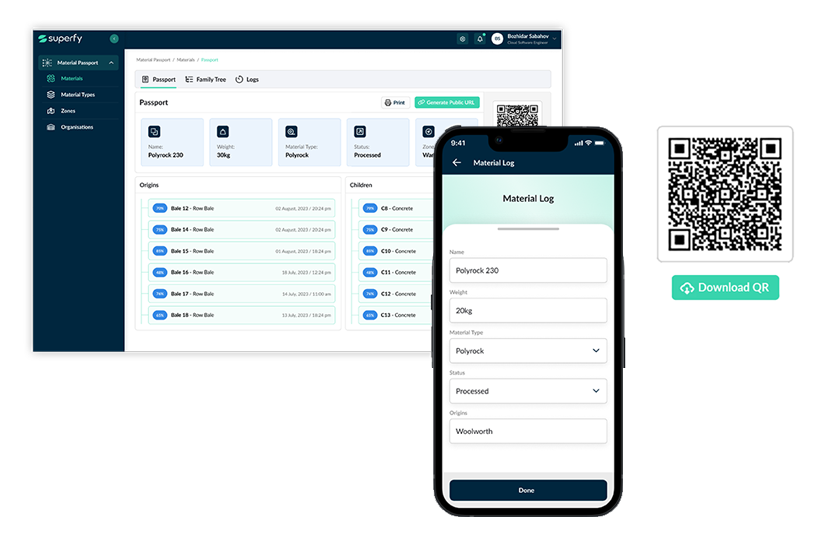
Superfy Product Passport
-
Item type tracking (clothing, shoes, accessories, household)
-
Quality estimates (resaleable, recyclable, waste)
-
Processing forecasting
-
Partner textile recycler coordination
-
Customer impact reporting for retail partnerships

Superfy Fleet
Revenue-optimized route planning and scheduling.
-
Value-based route optimization
-
Real-time route value calculations
-
Vehicle tracking and reporting
-
Driver performance monitoring
-
Fuel consumption analytics
The Business Impact
Reduce Collection Costs 40-50%
Stop checking empty bins. Typical textile collectors save £150K-£300K annually in fuel and labor costs.
Eliminate Overflows & Reputational Damage
Proactive collection based on fill-level data maintains professional appearance. Collectors report 90%+ reduction in overflow incidents.
Scale Collection Network 3-5x
Data-driven operations mean you can manage 1,000+ bins with the same back-office team that struggled with 200. Knowing what's in bins before collection allows planning sorting staff and preparing resale inventory pipelines. Processing efficiency improves 30-40%.
Prove Impact to Retail Partners & Donors
Detailed reporting on tonnes collected, CO2 saved, items diverted from landfill. Retailers use data for ESG reporting and marketing.
Capture Previously Lost Textiles: Typical collectors see 50-150% increase in volumes after deploying smart bins because the infrastructure makes donating easy.
The Circular Economy Opportunity
Current State
-
120 Million tonnes of clothing go to landfill or incineration annually
-
$500 Billion worth of clothing thrown away each year (Ellen MacArthur Foundation)
-
85% of global textiles end up incinerated or in landfill
-
Average garment worn only 7 times before disposal
The Gap: Consumers want to donate (surveys show 70%+ care about textile waste), but infrastructure doesn't exist at scale. Charity shops are overwhelmed. Textile collectors can't scale operations without smart technology.
Superfy's Role: Make textile donation infrastructure as ubiquitous and convenient as general waste bins. Prove the business case for scaling circular economy systems with data and efficiency.
FAQ
How do smart bins prevent people from dumping general waste in textile bins?
Combination of approaches: clear signage, smaller donation slots that only fit bags of clothing, QR code education when scanning, and periodic quality checks. Most programs see under 5% contamination because convenience encourages proper use.
What happens when donors can't or won't scan QR codes?
QR scanning is optional, not required. Bins accept donations with or without scanning. But most donors do scan because they want donation receipts, impact feedback, or loyalty points. Even 40-50% QR scan rates provide valuable data for optimization.
Can we track donations back to specific donors for loyalty programs?
Yes. When donors scan loyalty cards or enter details via QR code, system tracks their donation history. Perfect for retail take-back programs offering points or discounts. Privacy-compliant with GDPR—donors opt-in voluntarily.
How do we handle seasonal variations (spring cleaning, Christmas)?
System learns seasonal patterns automatically. After one year, it predicts spring surge, post-Christmas donations, back-to-school clearouts. You can pre-position extra capacity and schedule more frequent collections during known peaks.
What about high-value items or designer clothing—theft concerns?
Bins designed with anti-fishing devices preventing retrieval after deposit. In affluent areas, consider indoor bins (shopping center lobbies, apartment building reception areas) with added security.
Can we white-label the donor-facing QR experience?
Absolutely. Donation interface branded to your organization or retail partners. Custom impact messaging, charity selection options, and loyalty program integration. Maintains your brand throughout the donor experience.