INDUSTRIES
Transform Waste Cooking Oil Into Profitable Biofuel

Smart bins that eliminate unnecessary collections, calculate oil value in real-time, and maximize your margins.
The Waste Cooking Oil Collection Challenge
Wasted Collection Trips
Fixed collection schedules mean you're either collecting half-empty bins or responding to emergency calls when restaurants overflow. Every unnecessary trip eats directly into your margins.
Unknown Oil Value
You don't know how much oil is in each bin until you collect it. No way to prioritize high-value collections or calculate ROI per route before your driver leaves the depot.
Reactive, Not Proactive
Restaurants call when bins overflow, creating emergency collections that disrupt your optimized routes. You're always firefighting instead of planning efficiently.
Limited Customer Insights
Without data on each restaurant's oil generation patterns, you can't offer dynamic pricing, forecast biofuel production volumes, or identify your highest-value customers.
Smart Bins That Calculate Value Automatically
Superfy's smart fill-level sensors do more than just monitor how full your bins are—they calculate the exact value of the oil inside based on current market prices.
Prioritize High-Value Collections
See which bins contain the most valuable oil and prioritize those collections first. Optimize routes based on revenue, not just geography.
Dynamic Customer Pricing
Understand each restaurant's oil generation patterns and volume. Offer premium pricing to high-volume generators and negotiate better terms.
Forecast Biofuel Production
Predict incoming volumes with accuracy. Plan your biofuel production capacity and negotiate better sales contracts with biodiesel refiners.
Prevent Revenue Leakage
Get instant alerts if oil levels drop unexpectedly—indicating potential theft or contamination. Protect your valuable inventory.

How Smart Oil Collection Works
Smart Sensors Installed
Superfy Track sensors installed in waste oil bins monitor fill levels continuously via ultrasonic or pressure sensors. Data transmitted every hour.
Automatic Value Calculation
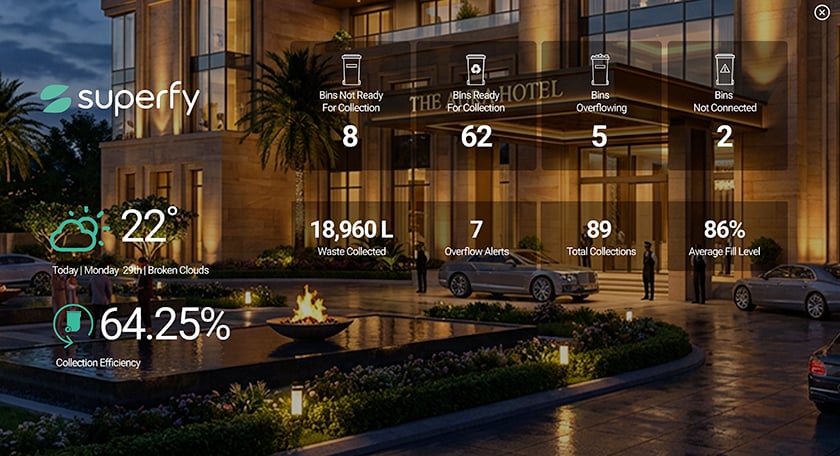
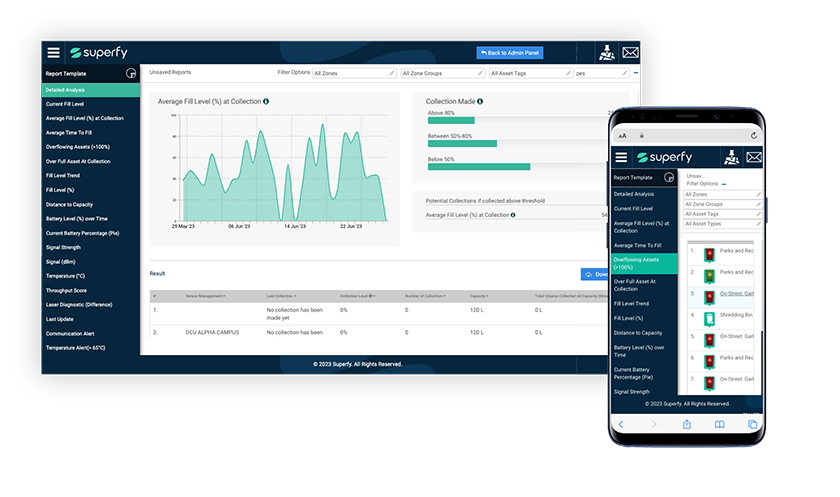
System calculates oil value based on fill level × current market price. Dashboard shows total collection value across your network in real-time.
Intelligent Scheduling
Collections automatically scheduled when bins reach optimal fill levels (typically 80-85%). System considers oil value, location, and route efficiency.
Optimized Routes & Reporting
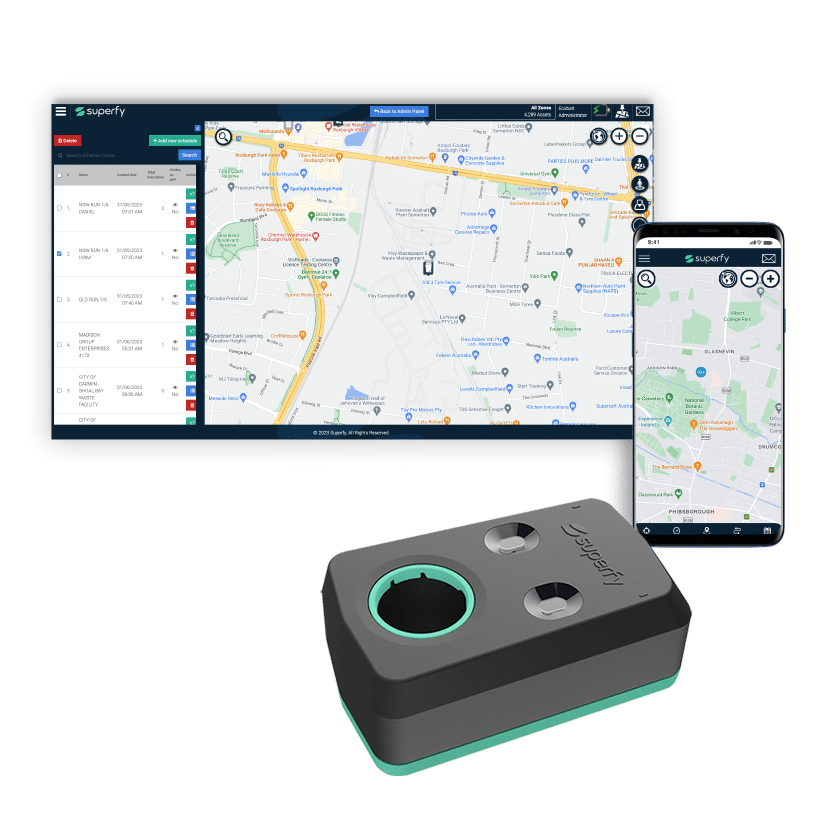
Superfy Fleet generates revenue-optimized collection routes. Superfy Materials tracks volumes and generates automated customer reports and invoices.
How Waste Oil Collectors Use Superfy
QSR & Fast Food Chain
Challenge
A national biofuel collector servicing 500+ KFC and McDonald's locations was doing weekly collections on fixed schedules. 40% of collections were less than half-full, wasting thousands in fuel and labor costs.
Solution
Deployed Superfy Track sensors in waste oil bins at every location. Collections automatically scheduled when bins reach 80% capacity. Dashboard shows real-time fill levels and calculated oil value across the entire network.
Result
42% reduction in collection trips, £180K annual fuel savings, 99% bin uptime (no overflows), real-time revenue forecasting.
Restaurant Groups & Hotel Chains
Challenge
High-end restaurant groups and hotels demanded guaranteed collection times and complained about bins overflowing on weekends. Emergency collections were destroying route efficiency.
Solution
Superfy Collections provides each restaurant with a branded portal showing their bin status in real-time. Predictive alerts warn restaurants when bins will reach capacity, and automated scheduling books collections before overflow occurs.
Result
Zero overflow incidents, 95% reduction in emergency collection requests, improved customer satisfaction scores, premium pricing for guaranteed service.
Route Optimization & Revenue Maximization
Challenge
Routes planned based on geography alone, not considering oil value or bin fill levels. High-value collections often delayed while drivers collected low-value bins "because they were on the route."
Solution
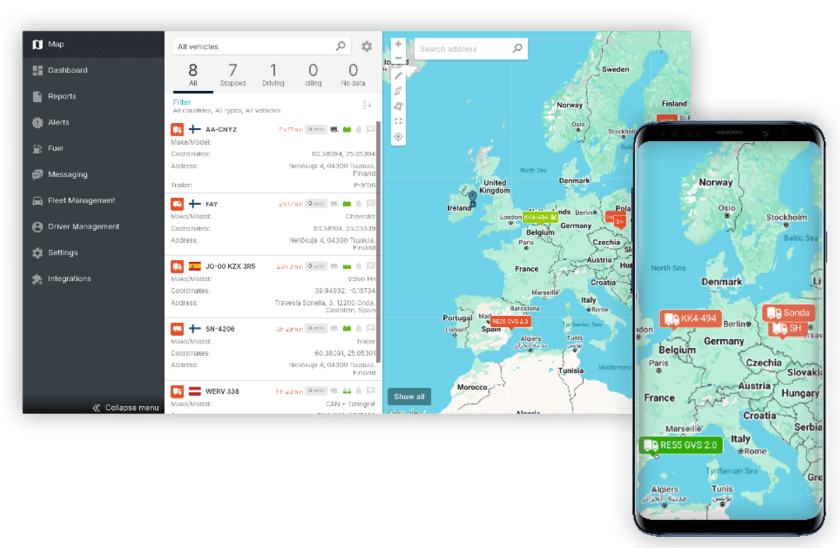
Superfy Fleet integrates fill-level data with route optimization. System prioritizes collections by oil value and urgency, automatically creating revenue-optimized routes. Real-time dashboard shows total route value before drivers depart.
Result
28% increase in daily collection revenue, 35% fewer route miles, drivers collect 30% more volume per shift, data-driven route planning.
QR Code On-Demand Collections
Challenge
Restaurants were calling to request emergency collections when bins filled unexpectedly due to events or busy periods. Call center was overwhelmed with 50+ calls per day, disrupting planned routes and creating scheduling chaos.
Solution
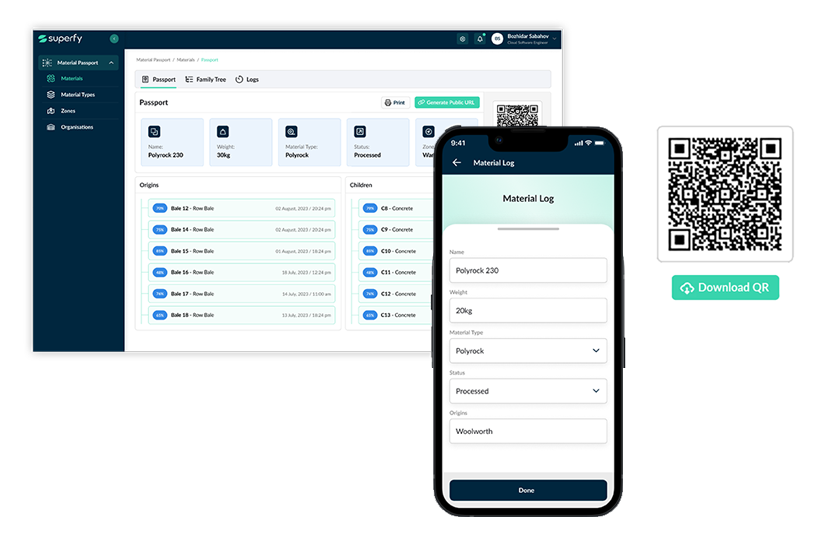
Deployed QR codes at every restaurant location. Kitchen staff simply scan the code when bins are getting full, enter basic details, and collection is automatically scheduled. System checks if bin is actually ready (via sensors) and slots collection into nearest available route.
Result
85% reduction in collection phone calls, 24/7 self-service for restaurants, intelligent request validation prevents false alarms, seamless integration with route planning.
Customer Reporting & Contract Management
Challenge
Large restaurant chains demanded detailed monthly reports on oil volumes, collection frequency, and environmental impact. Creating these reports manually took days and delayed invoicing.
Solution
Superfy Materials automatically tracks every collection by location, volume, and date. Generates branded monthly reports showing oil collected, CO2 saved from biofuel conversion, and collection service performance. Automated invoicing based on actual volumes.
Result
Automated monthly reporting, 90% faster invoicing, improved customer retention, upsell opportunities for premium reporting packages.
Superfy Products for Waste Oil Collection
Superfy Collections
Automated scheduling with QR code self-service and customer portals.
-
Automatic collection triggers at 80% full
-
QR code on-demand collection requests
-
Restaurant self-service portals
-
Intelligent request validation via sensor
-
Predictive overflow prevention
-
Customer communication automation
Superfy Track
Real-time bin monitoring with automatic value calculation based on fill levels and market prices.
-
Ultrasonic fill-level sensors
-
Automatic oil value calculation
-
Real-time alerts for collection scheduling
-
Theft and contamination detection
-
Historical volume pattern analysis
Superfy Materials
Collections automatically scheduled when bins reach optimal fill levels (typically 80-85%). System considers oil value, location, and route efficiency.
-
Track oil volumes, generate customer reports, and forecast biofuel production.
-
Automated volume tracking by location
-
Customer monthly reports with CO2 data
-
Biofuel production forecasting
-
Automated invoicing by volume
-
Chain of custody documentation
Superfy Fleet
Revenue-optimized route planning and scheduling.
-
Value-based route optimization
-
Real-time route value calculations
-
Vehicle tracking and reporting
-
Driver performance monitoring
-
Fuel consumption analytics
The Business Impact
Maximize Collection Revenue
Prioritize high-value collections and eliminate low-value trips. Know your route's total revenue before the truck leaves the depot.
40% Reduction in Collection Costs
Eliminate unnecessary collections and optimize routes. Typical customers save £150K-£300K annually in fuel and labor costs.
Forecast Biofuel Production
Accurate volume predictions enable better production planning and stronger negotiating positions with biodiesel buyers.
Improve Customer Satisfaction
99% bin uptime means no overflow emergencies. Premium restaurant clients get guaranteed service levels with data to prove it.
Common Questions from Waste Oil Collectors
How do the smart sensors calculate oil value in real-time?
Superfy Track sensors measure the fill level in your bins using ultrasonic or pressure sensors, taking readings every hour. This data is sent to the Superfy platform where it's multiplied by the bin's capacity and your current oil purchase price (which you can update in the system as market prices change). The dashboard displays the calculated value for each bin and total network value in real-time, allowing you to prioritize collections based on revenue potential.
How do QR code collections work with the smart sensors?
When a restaurant staff member scans the QR code to request a collection, Superfy automatically checks the bin's actual fill level via the installed sensor. If the bin is genuinely ready for collection (typically 70%+ full), the request is approved and slotted into the next available route. If the bin is only 30% full, the system can either reject the request or schedule it for later, preventing wasted collection trips from false alarms. This intelligent validation saves significant costs while still giving restaurants the convenience of on-demand scheduling.
What if restaurants are producing different volumes each week?
Superfy's machine learning analyzes historical fill patterns for each location and adapts collection schedules automatically. The system identifies seasonal trends, weekend spikes, and anomalies. You'll see predictions like "This KFC typically needs collection every 12 days, but next week is half-term so expect 8 days." This intelligence prevents both overflows and premature collections.
Can we retrofit sensors into our existing oil bins?
Yes. Superfy sensors are designed to retrofit into most commercial waste oil containers including wheelie bins, IBCs, and underground tanks. Our team will assess your current bin types and recommend the appropriate sensor configuration. Installation typically takes 15-20 minutes per bin and doesn't require any modifications to the containers.
How does this help with customer contract negotiations?
Having accurate data on each restaurant's oil generation volumes gives you massive leverage. You can offer volume-based pricing tiers, premium pricing for high-volume generators, and prove your service reliability with uptime statistics. The automated monthly reports showing volumes collected and CO2 saved also help you win contract renewals by demonstrating value beyond just "we collect your oil."
What about theft detection—can the sensors help with that?
Absolutely. If a bin's fill level drops unexpectedly (outside of your scheduled collections), you'll get an instant alert. This could indicate theft, contamination, or a leaking container. Many customers report catching theft within hours of it happening, recovering thousands in lost revenue. You can also set geofencing alerts if bins are moved from their designated locations.
How long does deployment take across a large network?
Most waste oil collectors are operational within 6-8 weeks for networks of 500-1000 bins. We typically deploy in phases: pilot program with 50-100 bins (2 weeks), evaluation and optimization (2 weeks), then full rollout. Our team handles sensor installation, or we can train your collection drivers to install sensors during regular service visits.


